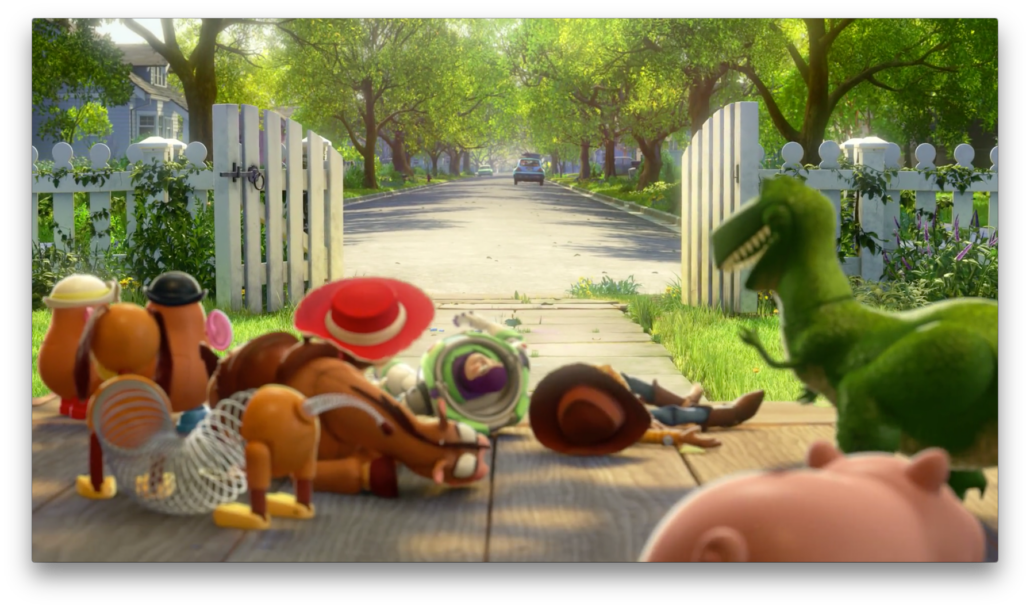

There are 2 minutes left in the movie, the popcorn bowl is empty, and you’re surrounded by a tearful audience as Woody the cowboy is given away by his owner, Andy, in the international sensation, Toy Story 3 (2010).
Andy, now a teenager, pulls away in his car as he begins his long anticipated journey to university.
As children, we might have guessed that the saddest part of pursuing a higher education was letting go of our old toys and bedrooms.
As official university students, it’s become obvious that it’s much more than that.
While letting go of a toy cowboy seems to be a solid hallmark for entering adulthood, the decisions which come with attending university foster agency, independence, and identity.
Managing Our Food

Physical independence means we are responsible for our own bodies—what they look like, how they feel, and where they go. From the eggs we purchase in the co-op, to the type of soap we choose for our laundry, these everyday decisions mark the first steps towards autonomy, especially as international students. Is soured cream, sour cream? Why is the international foods section all stale taco shells??
Among these new responsibilities that come with university life, managing our own diets and the kinds of food we eat takes precedence. Stocking the fridge, preparing meals, and consuming healthy foods can help us feel healthier and more self-sufficient. Even purchasing other kinds of consumables, like medicine, takes experience to know what we need and when we need it.
But oh boy, they weren’t kidding when they said London was expensive. For students looking to curb the costs, apps like TooGoodToGo can be a lifesaver, and are eco-friendly ways to remove food waste. I’ve had lovely jaunts to Starbucks for a “surprise bag” at only 5 quid for a couple of sandwiches, muffins, and even a cake pop. For more ideas on where to eat out cheaply in Chiswick, check out The Fork’s top 5 places to eat: https://www.thefork.co.uk/restaurants/london-c665790/chiswick-a4625/cheap-eats-t2372.
Without the guidance of parents or school meal plans, we must become aware of how our food choices impact our energy levels, focus, and overall well-being. It would be great to forget responsibility and fulfill our cravings at a fast-food place or a restaurant with nostalgic meals from back home, but our cravings aren’t sustainable—as some of us have had to find out the hard way (is it just these English floors, or is my bathroom scale leaning a little to the right?). Here we go adulting!
Curating Our Identity

Another way we learn to practice independence is through the maintenance of our appearance and hygiene. Choosing what clothes to wear, dressing properly for the changing weather, and keeping our bodies clean and refreshed becomes a more personal task when you’re made to do it alone. Any mistakes made are borne by you and you only—such as forgetting your coat during a frost (been there!).
Buying that specific clothing, similar to buying groceries, is another financial feat that requires proper budgeting and careful selection. Finding affordable retailers, like Primark, or discovering hidden thrift stores on the high street, are all great ways of buying new clothing without breaking the budget (Can someone tell me why socks are so expensive?). As young adults, choosing what we wear also begins the process of differentiating ourselves as people. We curate not only our closets, but our identities too.
“My first journey through fashion was more of a way to feel comfortable in my own clothing,” explains Lizy (she/her), a BA Psychology student, “I began to see fashion as a way to express myself and my personality…I just wear whatever makes me feel confident in my own skin.”
As Jeffrey Arnett explains in Emerging Adulthood: The Winding Road from the Late Teens Through the Twenties (2015), university life serves as a key period for self-sufficiency and personal development (52). Nothing is more personal than how we choose to express ourselves, especially as we become more and more familiar with what we like and dislike. Making those choices ourselves, rather than relying on others to make them for us, gives us the first taste of ownership over our personhood.



From Point A to Point B

As much as we fret over how we take care of our bodies, there also comes the task of moving our bodies. From navigating rush-hour schedules to interpreting train and plane tickets, we are left to make quick decisions and trust in our judgment when getting from point A to point B. Are you even commuting correctly if you’ve never had to run after a train? International students at Richmond have it even harder with needing to learn bizarre British pronunciation (I’m looking at you, “Chiz-ik Park”!). For those of you who may be on the learning curve navigating beyond the route from flat to campus, apps like Citymapper and Tfl Go are lifesavers. Having proper resources allows for proper timing. As one student said,
“I think commuting everyday forwarded my feelings of independence because it means that I can’t really stumble out of bed 10 or even 30 minutes before the beginning of my class and show up on time, so I have to calculate everything in advance.” – Amanda (she/her), BA Psychology
How many times has a weekend journey jumped from one hour to five hours and Google Maps can’t seem to tell us why? Well, weekends are the only times railroad companies can work on the trains, making Nationalrail.co.uk the best place to go if you aren’t sure when scheduled maintenance is meant to take place! “Engineering works,” psshh, well I sure hope it does.
Being ok with missing a train or arriving late to class is part of the process, but it’s better to make those mistakes now than when you have an interview—and even better when you turn away from the London underground and set your sights on special holidays:
“These traveling skills have helped me with going on larger vacations as well, which requires even more thinking and preparing! When I pull off a vacation, it feels like I have succeeded in my independence and can be comfortable in knowing that I can do things on my own.” – Amanda (she/her), BA Psychology


The Emotional Toll of it All

Physical wellbeing and proper commuting is well and all, but it wasn’t the sudden need to care about milk prices that made Toy Story 3 so devastating. In reality, it was leaving family behind. Perhaps one of the most unrecognizable parts of becoming independent is that natural step into newfound isolation. Being by ourselves for the first time, rather in a house with parents or siblings, is an unfamiliar and sudden adjustment you can’t always prepare for. Becoming comfortable WITH ourselves is hard enough. Now we have to be comfortable BY ourselves.
However, in doing so we develop an essential resilience that makes this big transition from teenager to young adult tangible. We learn to operate on our own, and find a rhythm in those quiet moments in-between. Even though it may not be the most wonderful thing to get used to, and there’s nothing to prevent that no-good feeling from settling in at 8pm, it’s important to remember that you aren’t alone in learning to be alone. We’re all trying to figure it out, and it’s ok to take time in becoming more acquainted with your new best friend: yourself.
If you’ve become a master navigator of the London underground or have befriended every Grammy working the counter at a charity shop, but still can’t seem to settle, Richmond offers excellent mental health support services. Although opinions about Richmond’s TalkCampus app are divided, I’ve found their counselling system to be instrumental in my adjustment. Check out Richmond’s counselling page to learn more: https://www.richmond.ac.uk/student-life/health-care-and-counselling/.
What Does it Mean?

As Andy drives away, leaving Woody and an old chapter behind, we’re reminded that growing up doesn’t mean letting go of who we were—it means carrying those pieces of ourselves forward into something new. Whether it’s figuring out how to make pasta that isn’t overcooked or choosing the outfit that finally feels right, these moments build more than habits—they build you.
And while the road may feel long or winding (and occasionally soggy with a surprise London downpour), it’s yours. You’re the one behind the wheel now. We’re all leaving something behind when we step into this new chapter—but what we gain is the chance to meet ourselves for the first time, independent and becoming.
So here’s to late-night laundry runs, emotional realizations over meal deals, and those little wins that remind us: we’re doing okay. You’ve got this, one small decision at a time.
*Arnett, Jeffrey Jensen. Emerging Adulthood: The Winding Road from the Late Teens Through the Twenties. Oxford University Press, 2015, p. 52 & 76.